1
/
of
1
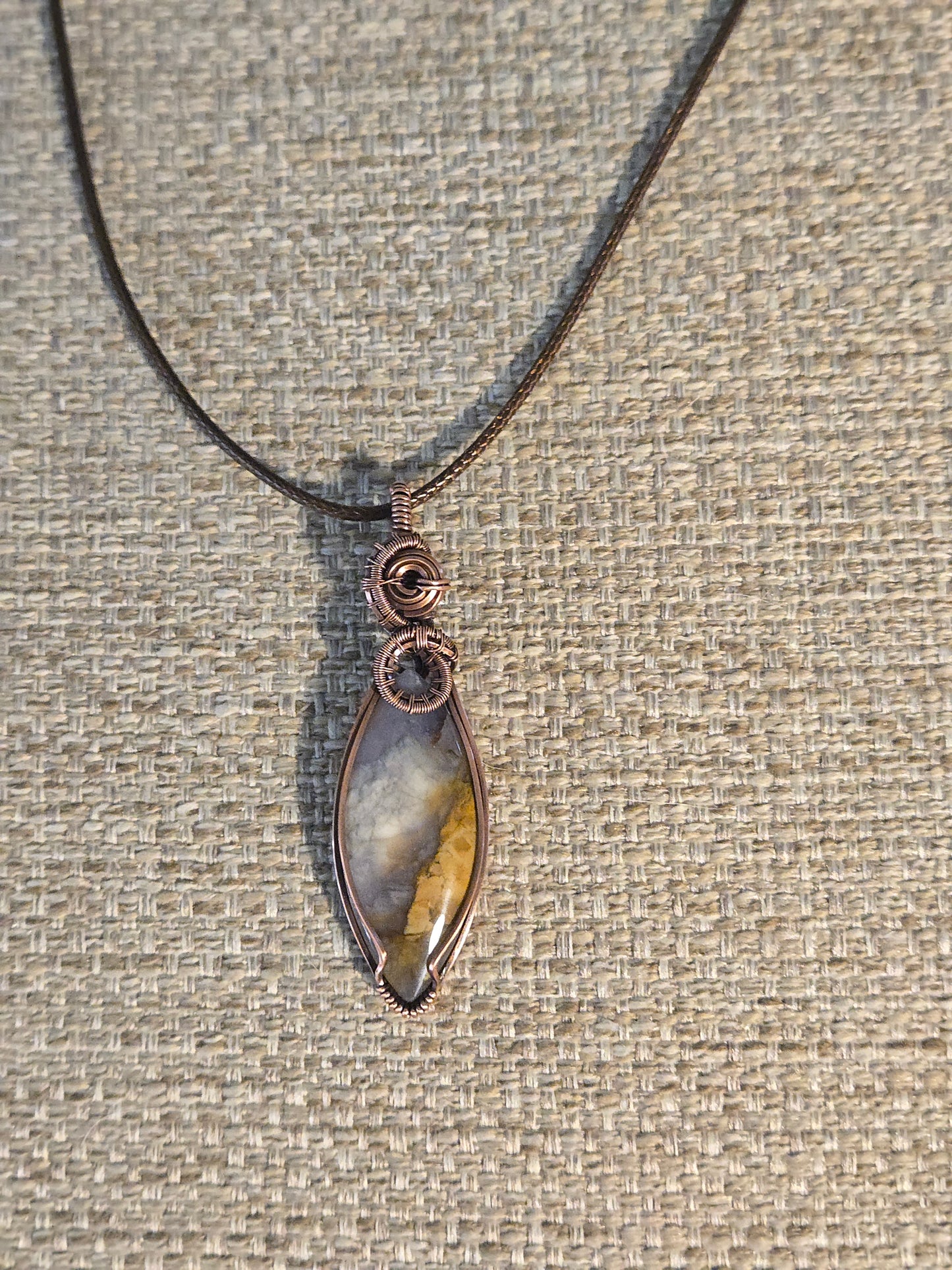
Common Opal in Antiqued Copper Wire
Common Opal in Antiqued Copper Wire
Regular price
$36.00 USD
Regular price
$85.00 USD
Sale price
$36.00 USD
Unit price
/
per
Couldn't load pickup availability
Indonesian common opal—primarily found in regions like Java and Banten—is highly sought after for its vivid solid colors and its unique, fossilized wood varieties. Unlike precious opals, common opals lack rainbow flashes but boast uniform,glowing hues.
Common opal (often called "potch") is an abundant, naturally occurring mineraloid. Unlike precious opals, it lacks iridescence or "play-of-color". Instead, it offers a solid, uniform color and a smooth, milky, or waxy internal glow.
Key Characteristics
- Appearance: Ranges from opaque to translucent, frequently exhibiting solid colors without flashing, fire, or rainbow patterns.
- Structure: Amorphous silica containing trapped water; lacks a repeating crystalline structure.
- Colors: Found in virtually any color, with white, gray, milk, honey, yellow, and brown being the most abundant. More vibrant varieties like Peruvian pink/blue opal and orange-red fire opal are highly prized.
- Durability: Relatively soft, rating only 5.5 to 6 on the Mohs scale of hardness, making it susceptible to scratches and chipping.
Common Varieties
- Hydrophane Opal: Highly porous; temporarily turns transparent or translucent when soaked in water.
- Hyalite: A perfectly clear, colorless, and glass-like variety that often glows bright green under UV light.
- Dendritic Opal: Opaque white or cream stones featuring dark, fern-like manganese inclusions that mimic tree branches.
Care & Identification
Because of its unique composition, common opal feels significantly lighter in weight than quartz or agate.
Care Instructions:
- Cleaning: Use only warm, soapy water and a soft cloth.
- Avoid Chemicals: Do not use harsh chemical cleaners, steam, or ultrasonic baths.
- Thermal Shock: Keep away from extreme heat or sudden temperature changes, as the water trapped in the stone can evaporate and cause cracking.
Share